The Psalms - Psalm 20 and 21
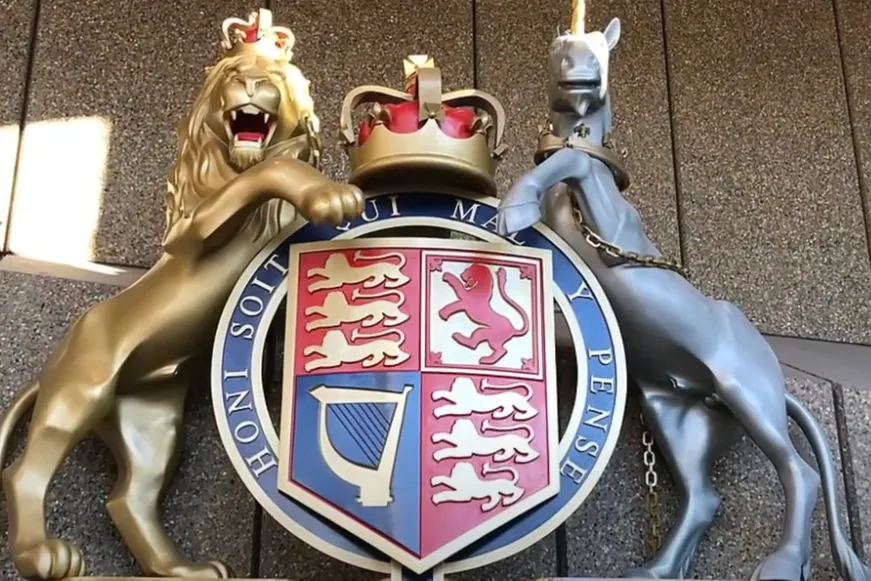
God Save the King
by Rev. Jim Jester
February 1, 2026
SCRIPTURE READING: 1 Timothy 2:1-4
“I exhort therefore, that, first of all, supplications, prayers, intercessions, and giving of thanks, be made for all men; 2 For kings, and for all that are in authority; that we may lead a quiet and peaceable life in all godliness and honesty. 3 For this is good and acceptable in the sight of God our Saviour; 4 Who will have all men to be saved, and to come unto the knowledge of the truth.”
INTRODUCTION
We are still in the series I have called the Kingship of the Anointed. Psalm 20 and 21 fit together like hand and glove. Psalm 20 is a royal liturgy, a prayer sung by different voices (congregation and/or choir) in the Temple worship service. This usually takes place as the king prepares for battle. After the battle is over, the king will give a thank offering at the Temple. It is at this time that Psalm 21 may accompany the king’s offering.
The context of Psalm 20 is that the king has already prayed, and sacrifices are being offered by the priests on his behalf (1 Sam. 7:9).
PSALM 20
The people pray for their King (v. 1-5):
“The LORD hear thee in the day of trouble;
The name of the God of Jacob defend thee;
2 Send thee help from the sanctuary,
And strengthen thee out of Zion;
3 Remember all thy offerings,
And accept thy burnt sacrifice.
4 Grant thee according to thine own heart,
And fulfil all thy counsel.
5 We will rejoice in thy salvation,
And in the name of our God we will set up our banners:
The LORD fulfil all thy petitions.” (Ps. 20:1-5, NKJV)
The LORD hear thee…the God of Jacob defend thee: The congregation, or a choir on its behalf, prays that God will grant the king’s request for victory in battle. God’s help is thought of as coming from the Temple (in our case, the Church), which is his dwelling place.
This ought to remind us of Jacob’s wrestling with the Angel in Genesis 32:24. Many are of the opinion that this Angel was Jesus, the Angel of the Covenant, in whom was the “fullness of the Godhead bodily” (Col. 2:9). He was the God of Jacob, who blessed him and gave him a new name (Israel) and a new nature.
From the sanctuary: This brings to mind the tabernacle, the center of Israel’s worship: “Out of Zion,” or the hills of Zion. The word here for sanctuary is qodesh (holiness), a synonym for Zion, where already God’s ark (but not yet His Temple) signified His presence. This place is the source of God’s help and blessing. Adam Clarke said, “The sanctuary was the place where God recorded his name; the place where he was to be sought, and the place where he manifested himself. He dwelt between the cherubim over the mercy seat. He is now in Christ…”
Remember all thy offerings: Sacrifice was commonly made at important moments, such as on the eve of battle. This is a prayer that God would see and accept the sacrifices King David would make before a war. This reminds us that not all sacrifices are accepted before God. If they were not offered with faith and in accordance with the Levitical system, they would not be remembered or accepted.
Grant thee according to thine own heart: In this moment, King David had one desire, to defend the people and the kingdom in covenant with God. Thus it was fitting to pray, “May He grant you according to your heart’s desire.” This was probably the prayer of the high priest on behalf of David.
When our desires are in accord with the plan and will of God, we can pray this same prayer with confidence. We can also look for God to bring our desires, and our will, into more conformity with His will and purpose.
And fulfill all thy counsel: Since David’s purpose was victory for the family of God, this was a necessary prayer. This statement also applied to the great desire and purpose for Jesus as He went to battle for our salvation. We see Jesus struggling in the Garden of Gethsemane and praying, “Not my will, but thine be done.” Jesus knew this as shown by His prayer in John 17: “I have finished the work which You have given Me to do” (Jn. 17:4).
The Apostle Paul knew this fulfilled desire and purpose, shown by these words toward the end of his earthly life: “I have fought the good fight, I have finished the race, I have kept the faith” (2 Tim. 4:7). On a personal level, God gives each one of us a purpose to fulfill in His great plan.
We will rejoice in thy salvation: This was the confidence the people had in King David’s success. They had so much trust in God’s deliverance that they had already planned to “set up our banners” of joyful celebration.
The LORD fulfill all thy petitions: It is likely that the high priest concluded the prayer with this phrase. Once again, the prayer demonstrates the confidence that God would hear and fulfill the prayers of His king.
This was true both of David and the Son of David (Jn. 17:1-5) — the King of Israel and the King of Kings. Jesus prayed for success in His work on the cross, and it was unthinkable that the Father would not answer the prayers of the Son.
The triumph of the LORD’s Anointed (v. 6-8):
“Now know I that the LORD saveth his anointed;
He will hear him from his holy heaven
With the saving strength of his right hand.
7 Some trust in chariots, and some in horses:
But we will remember the name of the LORD our God.
8 They are brought down and fallen:
But we are risen, and stand upright.” (Ps. 20:6-8, NKJV)
Now know I that the LORD saves: A priest or prophet proclaims a message of assurance. He knows that God will grant saving help to his anointed king. The fact that the answer is said to have come from “his holy heaven” this time rather than from Zion (as in v. 2), simply reflects Israel’s faith that God is sovereign over all, as well as present among his people. Israel’s enemies place their confidence in military equipment, but Israel places her confidence in the name of the Lord. Deuteronomy 20:1, “When thou goest out to battle against thine enemies, and seest horses, and chariots, and a people more than thou, be not afraid of them: for the LORD thy God is with thee, which brought thee up out of the land of Egypt.”
His anointed: In a sense, all of the kings of Israel were God’s anointed because they were all appointed to their office by a literal anointing of oil poured upon their heads. This literal anointing was a picture of the spiritual anointing with the Holy Spirit needed for leading the people of God. In saying “His anointed,” David refers to himself as king. At the same time, it is also understood that there would come an ultimate Anointed One, the perfect King of Israel — Jesus the Christ.
He will hear him from His holy heaven with the saving strength of His right hand: This confirms the idea that the Lord saves His anointed. He is saved by and from “His holy heaven;” God sends help from His throne. He is delivered with power, and favor, with the strength from “His right hand.” Each of these was true for King David, but even more perfectly true of the Son of David, Jesus, the ultimate anointed of God.
Some trust in chariots, and some in horses: If writing today, David might say something like, “Some trust in nuclear weapons and some trust in tanks.” It is part of our nature to put our trust in such things.
Part of the reason David refused to “trust in chariots” was because God had commanded it so, commanding in the Law of Moses that the Kings of Israel would not multiply horses for themselves, either for use in cavalry or to pull war chariots (Deut. 17:16). David drew a strong contrast. “They trust in those things, but our trust is in God.”
But we will remember the name of the LORD our God: David put his trust in the person of God. He didn’t carry the “name of the LORD” as a magical, or mysterious, incantation (such as YHWH); but rather “the name” speaks of the overall character of God, and is an expression of his faithfulness to his covenant. Solomon says, “The name of the LORD is a strong tower: the righteous runneth into it, and is safe” (Pro. 18:10). This character and faithfulness of God was stronger to David and Israel than thousands of chariots or horses.
They are brought down and fallen; but we are risen and stand upright: David’s trust in God could be justified on many grounds, but one of those was the simple truth that trusting God works. Those who trusted in their own strength have been brought down. Those who remembered the name (reputation) of the Lord have risen.
The concluding prayer of the people (v. 9):
“Save, LORD!
Let the King hear us when we call.” (Ps. 20:9, NKJV)
With this very short prayer this entire psalm is summarized: “Give victory to the king, O Lord” (RSV), is literally “Save the king, O Lord.” Like its modern counterpart, “God save the king,” it is also a prayer for the whole nation, since its well-being is often dependent upon its ruler. This is the language of faith.
We should note that the word “King” is capitalized here in the New King James Version, meaning that God is King. The battle we face is His, not ours. But not all translations render it in upper case. Barnes comments:
“Let the King: That is, ‘let God,’ spoken of here as the Great King. The connection and the parallelism demand this interpretation, for to God only is this prayer addressed. He is here invoked as the supreme monarch. A king going forth to war implores the protection of a greater king than himself.”
Another translation renders it, “Jesus save the king: and hear us in whatever day we call upon you” (AOB). This is quite appropriate.
PSALM 21
Psalm 21 can be viewed as the answer to the prayer of the king in Psalm 20, and as a celebration. It is also possible that Psalm 21 celebrates the anniversary of the king’s coronation. In verse 3 of the psalm it mentions “a crown of pure gold upon his head.”
Thanksgiving for past mercies (v. 1-7):
“The king shall have joy in Your strength, O LORD;
And in Your salvation how greatly shall he rejoice!
2 You have given him his heart’s desire,
And have not withheld the request of his lips.3 For You meet him with the blessings of goodness;
You set a crown of pure gold upon his head.
4 He asked life from You, and You gave it to him—
Length of days forever and ever.
5 His glory is great in Your salvation;
Honor and majesty You have placed upon him.
6 For You have made him most blessed forever;
You have made him exceedingly glad with Your presence.
7 For the king trusts in the LORD,
And through the mercy of the Most High he shall not be moved.” (Ps. 21:1-7, NKJV)
The king shall have joy in Your strength, O LORD: King David had many reasons to take joy in the strength of God. For example, his early time as a boy facing off with Goliath, a seasoned warrior, with only five smooth stones. Of course, many battles followed. King David had achieved the victory which he had desired and prayed for in Psalm 20:1-9. The word “strength” here implies that all the success referred to was to be traced to God. It was not by the bravery of a mortal arm; it was not by the skill of the king himself; it was by the power of God alone that he was granted deliverance.
You have given him his heart’s desire: The strength and salvation of God came to David in response to both the desire of his heart and his spoken prayers, “the request of his lips.” In the previous psalm, the remnant prayed that the desire of the king will be fulfilled (Ps. 20:4). Here, in this psalm, that prayer is answered.
This speaks to the special place answered prayer has in the life of the believer. Every Christian should know the thrill of frequent answers to prayer. If this is not happening, perhaps he is prayer-less, he is praying wrongly, or he has some hindrance to prayer. There are many things that can hinder prayer, but here are a few:
• Not abiding in Jesus (Jn 15:7)
• Failure to fast (Mat 17:21)
• Selfish praying (Jas 4:3)
• Not praying in God’s will (1 Jn 5:14-15)
• Not praying in the name of Jesus (Jn 14:13-14)
• Pride (Jas 4:6, Pro 3:34)
• Trusting in the length or the form of prayer (Mat 6:7)
The avoidance of these things does not earn God’s response; He is not in debt to us if we avoid them. Yet they are hindrances to answered prayer.
You meet him with the blessings of goodness: King David could see that the goodness of God had come to meet him. He did not have to hunt these down. God went ahead of David with blessings, and David thanked Him for it. Yet often, it did not seem like that during the many years between his anointing for the throne as a young man and when he finally took the throne of Israel.
God’s goodness and grace come to meet us all the time.
• The grace of His love, before we ever loved Him.
• The grace of restraint, that keeps us back from sins that would harden our hearts to His call.
• The grace of salvation, that comes to meet us in the convicting work of the Holy Spirit.
• The grace of service, preparing the ground where we will work before we ever get there.
You set a crown of pure gold upon his head: No doubt it was true that King David let God put the crown “upon his head.” In some sense, he did have the right and reasons to forcibly take the crown from Saul, but instead he respected the king and waited for God’s timing.
He asked life from You, and You gave it to him: David went into battle praying that God would preserve his life, and now he celebrated the answer to that prayer.
The phrase “for ever and ever” implies a hyperbole, or an allusion, to the endless dynasty promised to David in 2 Samuel. Ultimately, the New Testament has filled in this picture with the ultimate king, the Messiah, Jesus the Anointed, without any exaggeration. God has given His Son the long life that He desired. This is life with a “length of days” that has no end as shown in Isaiah 53:10; “Yet it pleased the LORD to bruise him; he hath put him to grief: when thou shalt make his soul an offering for sin, he shall see his seed, he shall prolong his days, and the pleasure of the LORD shall prosper in his hand.” God speaks to David of this when David wanted to build a dwelling place for Him. God then promises that He will give David a house and a kingship to which there will be no end: “And thine house and thy kingdom shall be established for ever before thee: thy throne shall be established for ever.” (2 Sam. 7:16)
His glory is great in Your salvation: David knew the exaltation that came to kings as victors in battle; but here he declared that this glory, honor and majesty came from God, not from himself. Speaking of Jesus, Psalm 96:6 states, “Honour and majesty are before him: strength and beauty are in his sanctuary” (Ps. 96:6).
You have made him most blessed forever: David proclaimed that he was “blessed forever,” but it was the presence of God that was his greatest happiness; not the crown of royalty or victory.
Psalm 21:6 tells us of Jesus: “For You have made him most blessed forever; You have made him exceedingly glad with Your presence.” This shows us that even though Jesus was a man of sorrows and acquainted with grief (Isa. 53:3), yet at the same time, He was a man who knew what it was to be “most blessed” and “exceedingly glad.”
The king trusts in the LORD, and through the mercy of the Most High he shall not be moved: David declared his trust, and it would continue to preserve him in the future. The response to the Messiah’s trust in Him is that “the Most High” upholds Him by His lovingkindness. Each of these things was true of King David, but they are even more true of David’s greater Son, Jesus the Christ.
• Jesus met “blessings of goodness” when He ascended to heaven.
• Jesus wears the “crown,” both as King of Kings and conqueror.
• Jesus “asked life from” the Father, and was raised from the grave.
• Jesus rejoiced in the “presence” of His Father, even though there was a time on the cross when it left Him.
We can apply each line in Psalm 21:3-7 to Jesus, victorious after His great work on the cross.
What God will do to His enemies (v. 8-12):
“Your hand will find all Your enemies;
Your right hand will find those who hate You.
9 You shall make them as a fiery oven in the time of Your anger;
The LORD shall swallow them up in His wrath,
And the fire shall devour them.
10 Their offspring You shall destroy from the earth,
And their descendants from among the sons of men.11 For they intended evil against You;
They devised a plot which they are not able to perform.
12 Therefore You will make them turn their back;
You will make ready Your arrows on Your string toward their faces.” (Ps. 21:8-12, NKJV)
Your hand will find all Your enemies: David recognized that even though he was victorious in battle, God was not done finding and judging His enemies. He will make them “as a fiery oven” as soon as He shows His face to them (Ps. 21:9).
The LORD shall swallow them up in His wrath: Here God reveals His wrath. It will happen “in the time” of His anger, or the time of His presence, which is the time “when the Lord Jesus will be revealed from heaven with His mighty angels in flaming fire, taking vengeance on them that know not God” (2 Thess. 1:7-8).
Their offspring You shall destroy from the earth: For many reading this passage, it would make them think that God is unmerciful and a tyrant. But these enemies of God are part of that enmity of Genesis 3:15. There can never be peace, or the conversion, of those that descended from the serpent. Their destiny is found in the book of Obadiah.
So, not only will they themselves perish in judgment, but also “their descendants” God will destroy “from among the sons of men” (Ps. 21:10). There will be no successors in evil. There will be no remnant of them left through whom evil could progress or revive. Evil has been eradicated radically, that is, root and all. Truth and righteousness will triumph and never be trampled on again. The Messiah, Jesus, reigns!
For they intended evil against You: The strong statements of judgment in Psalm 21:8-10 seem to demand an explanation. Why such a severe judgment? Because they intentionally rebelled against God, His Anointed (Ps. 2:2) and His people.
They have “devised a plot:” They did not want Jesus to be King over them (Lk. 19:14). The jews devised all kinds of ways to put Him to death. They made many attempts on His life. But nothing came of their cunning plans that were bigger than they could perform. Only, when God’s timing arrived, did Jesus deliberately lay down his life.
You will make them turn their back: David sees—and perhaps literally saw—the enemies of God running away on the field of battle, with their backs turned against the advancing armies of God.
You will make ready Your arrows on Your string toward their faces: David saw the enemies of God as helpless, seeing the ready arrows and taut bow string aimed toward their faces. That He is aiming His bow at their faces means they are on an advance in His direction. He is not lying in ambush, but is attacking them head-on; with the result described in the previous verses.
This reminds us how near the judgment of God actually is against those who reject Him, and how it is only His great mercy that prevents the release of His arrow of judgment against them. It is a great sin that man ignores and presumes upon the great mercy of God. It is rarely even thought of, or understood, by so many today.
Concluding prayer of the people (v. 13):
Be exalted, O LORD, in Your own strength! We will sing and praise Your power.” (Ps. 21:13, NKJV)
The psalm ends with a prayer that the LORD will exalt Himself in strength, and the promise of the remnant that will then sing of His power. The King began in the opening of the psalm by praising the strength of God. Then the victorious song began.
The song was sung in faith. God will do what He promises, and will fulfill it in His anointed King. The remnant shares in that confidence and in the certainty that it will be just as it was sung. The LORD has already helped, and it is certain that He will continue to help.
The knowledge that things will eventually be all right does not make prayer unnecessary. The certainty of our victory cannot endure in any other way than through prayer alone. This prayer of faith of the remnant is therefore completely appropriate.
We will sing and praise Your power: After the direct statement of praise for God’s strength, David expressed the commitment that he and the family of God would continue to praise God in song.
The Apostle Paul implies a very close relationship between singing and praying. “…I will pray with the spirit, and I will pray with the understanding also: I will sing with the spirit, and I will sing with the understanding also” (1 Cor. 14:15). So, sing your prayer, and pray your song.
What matters in the end is that Jesus the Anointed is glorified. Thus, this psalm corresponds to the prayer: “Hallowed be Your name” (Matt. 6:9).
End