The Psalms - Psalm 18
A Thanksgiving of the Lord’s Anointed
By Rev. Jim Jester
January 4, 2026
SCRIPTURE READING: Psalm 18:1
“To the Chief Musician. A Psalm of David the servant of the LORD, who spoke to the LORD the words of this song on the day that the Lord delivered him from the hand of all of his enemies and from the hand of Saul. And he said: ‘I will love You, O LORD, my strength.’” (NKJV)
INTRODUCTION
The opening Scripture reading is the longest title in the Book of Psalms. In this title David tells us whom the psalm was written for with the words “to the Chief Musician.” Thus, we can deduce that God Himself is that Chief Musician; albeit, there are times when context reveals someone else as chief: “For in David’s lifetime—and in the lifetime of Asaph, choir master [or “chief” in some versions] of old—there were songs of praise and thanksgiving to God.” (Neh. 12:46, ISV) Everything in this title is directing our attention to God as the Chief of music. David tells us to consider himself “the servant of the LORD.” He tells us the occasion for writing the psalm — possibly not only the aftermath of Saul’s death (described in 1 Sam. 31; 2 Sam. 1), but also of the period leading to David’s enthronement (2 Sam. 2-5). He also tells us something about Saul, who out of undeserved kindness from David, is not explicitly counted among David’s enemies: “…from the hand of all of his enemies and from the hand of Saul.”
This psalm is virtually the same as the psalm sung by David at the very end of his life, as recorded in 2 Samuel 22. It is likely that David composed this as a younger man; yet in his old age he could look back in gratitude and sing this song again, reflecting upon his whole life. It is no wonder David exclaims, “I will love You, O LORD, my strength.” The Lord Jesus Christ said, “If you love me, keep my commandments.” That is certainly a good place to start in loving our God.
A PRELUDE OF PRAISE (v. 1-3):
“I will love You, O LORD, my strength.
The LORD is my rock and my fortress and my deliverer;
My God, my strength, in whom I will trust;
My shield and the horn of my salvation, my stronghold.
I will call upon the LORD, who is worthy to be praised;
So shall I be saved from my enemies.” (Ps. 18:1-3, NKJV)
I will love You, O LORD: This declaration was made in a season of great triumph. David decided to love the LORD, but even more, he simply felt compelled to love the LORD who had delivered him in such a great way. This first verse is not found in 2 Samuel 22.
Since he was taken from the sheepfold and anointed the future king of Israel, David had lived some 20 or so years as a fugitive, and as a man who had lost everything. He lost his safety, his youth, his family, his career; at times, he lost his close relationship with God. But despite all, he remained steadfast to the Lord, and God, in His timing, delivered David and fulfilled that long-ago promise of his anointing.
The LORD is my rock and my fortress and my deliverer: David knew this to be true before, but he knew it by faith. Now David sang from the perspective of experience. When David said, “The LORD is my rock,” he likely meant it in more than one sense. A rock was a help to the ancient Judeans in several ways.
• It could provide essential shade from the sun (Isa. 32:2).
• It could provide shelter in its crevasses (Ex. 33:22).
• It could provide a firm place to stand and fight, as opposed to sinking in sand (Ps. 40:2).
My God, my strength, in whom I will trust: David knew the triumph of God’s strength over the long run. Many people fall under the length of an extended season of trial, and David almost did (1 Sam. 27, 29-30). The fact that David saw God as his strength reminds us of the promise later expressed by Paul: “Be strong in the Lord and in the power of His might” (Eph. 6:10).
My shield and the horn of my salvation: David used nine honorable epithets for God just in these first few verses. He cannot say enough about who God is and what He was for David:
• His strength, the One who empowered him to defeat his enemies.
• His rock, which indicates a place of shelter.
• His fortress, a place of strength and safety.
• His deliverer, the One who made a way of escape.
• His God, who gives spiritual life and is the object of adoration.
• His strength, here David uses a different Hebrew word than in verse one: The idea behind this word is fountain, source, origin.
• His shield, a weapon of defense.
• His horn, a weapon of offense; a symbol for strength in attack.
• His stronghold, his tower where he could see from a distance.
It is no wonder that David resolves to call upon his God, and no wonder that he expects to be saved from his enemies.
I will call upon the LORD… so shall I be saved from my enemies: In previous psalms, David cried out to God in times of intense crisis; now he cries out to God with the same strength in praise for His deliverance. It is anticipation faith: “Now faith is the substance of things hoped for, the evidence of things not seen” (Heb. 11:1). Many are far more passionate in asking for help than they ever are in giving praise.
The thought, “So shall I be saved from my enemies” did not always come easy for David. There was a time when he said to himself: “Now I shall perish someday by the hand of Saul. There is nothing better for me that I should speedily escape to the land of the Philistines” (1 Sam. 27:1). But in the end, God’s strength was greater than his weakness.
DAVID’S DISTRESS (v. 4-6):
“The pangs of death surrounded me,
And the floods of ungodliness made me afraid.
The sorrows of Sheol surrounded me;
The snares of death confronted me.
In my distress I called upon the LORD,
And cried out to my God;
He heard my voice from His temple,
And my cry came before Him, even to His ears.” (Ps. 18:4-6, NKJV)
The pangs of death… the floods of ungodliness: David described these two threats as a significant trial. This reminds us that despite the fact that David was a warrior, he was also a sensitive man who was troubled by the words and deeds of the ungodly.
He heard my voice from His temple: This was long before the later building of the temple in the days of Solomon. The city of Jerusalem wasn’t in control of Israel at the time David wrote this (not until 2 Sam. 5:6-10). Yet David knew that God had a temple, a heavenly temple that was the model for the tabernacle and the later temple (Ex. 25:9, 40), and that God heard the prayers of his people.
GOD’S DRAMATIC DELIVERANCE (v. 7-15):
“Then the earth shook and trembled;
The foundations of the hills also quaked and were shaken,
Because He was angry.
Smoke went up from His nostrils,
And devouring fire from His mouth;
Coals were kindled by it.
He bowed the heavens also, and came down
With darkness under His feet.
And He rode upon a cherub, and flew;
He flew upon the wings of the wind.
He made darkness His secret place;
His canopy around Him was dark waters
And thick clouds of the skies.
From the brightness before Him,
His thick clouds passed with hailstones and coals of fire.The LORD thundered from heaven,
And the Most High uttered His voice,
Hailstones and coals of fire.
He sent out His arrows and scattered the foe,
Lightnings in abundance, and He vanquished them.
Then the channels of the sea were seen,
The foundations of the world were uncovered
At Your rebuke, O LORD,
At the blast of the breath of Your nostrils.” (Ps. 18:7-15, NKJV)
Then the earth shook and trembled: David describes the dramatic deliverance God brought to him. It was marked by earthquakes, smoke and fire, representing God’s anger, and His personal intervention: “He rode upon a cherub, and flew.” This terminology emphasizes the judgment of God; but since the judgment is directed against David’s enemies, it means deliverance for David.
The LORD thundered from heaven: According to David’s description, God moved heaven, earth, and sea to deliver him. Help came to him through earthquakes, thunder, storms, and lightning. He clearly used images from the way God delivered Israel from Egypt, at Mount Sinai, and during the conquest of Canaan under Joshua. Yet, it is also possible that David literally saw such phenomenon sent from God in fighting for him. Though such events are not recorded in First or Second Samuel, we remember that there were long periods of David’s life where we have very few descriptions of events, so he must have experienced God’s deliverance many times in a variety of ways.
DAVID SET IN SAFETY (v. 16-19):
“He sent from above, He took me;
He drew me out of many waters.
He delivered me from my strong enemy,
From those who hated me,
For they were too strong for me.
They confronted me in the day of my calamity,
But the LORD was my support.
He also brought me out into a broad place;
He delivered me because He delighted in me.” (Ps. 18:16-19, NKJV)
He took me; He drew me out of many waters: David felt that he was drowning in his enemies’ onslaught. Like a man caught up in a flood, David knew his enemies were too strong, but that God could deliver him. So, not only did God pluck David from the flood, but he also set him in a “broad” or safe place.
He delivered me because He delighted in me: We can say that David meant this in two ways. First, he delighted in David in the sense that He chose him, anointed him, and set His ”marvelous lovingkindness” (Ps. 17:7) upon him. Second, he delighted in David because he lived a righteous life, as explained in the following verses.
GOD DELIVERS BECAUSE OF RIGHTEOUSNESS (v. 20-24):
“The LORD rewarded me according to my righteousness;
According to the cleanness of my hands
He has recompensed me.
For I have kept the ways of the LORD,
And have not wickedly departed from my God.
For all His judgments were before me,
And I did not put away His statutes from me.
I was also blameless before Him,
And I kept myself from my iniquity.
Therefore the LORD has recompensed me according to my righteousness,
According to the cleanness of my hands in His sight.” (Ps. 18:20-24)
The LORD rewarded me according to my righteousness: During his long season of persecution under Saul, David was challenged to respond in unrighteous ways. He had many opportunities to strike out against Saul in self-defense. Yet David consistently conducted himself in righteousness and knew that God rewarded him for it.
I have kept the ways of the LORD… I was also blameless before Him: This was not a claim of sinless perfection by David. In fact, the year or so before the death of King Saul was spent in some significant measure of moral compromise (1 Sam. 27; 29-30). Yet through it all David kept a core of integrity, was correctable despite his failings, and most importantly, did not fail in the greatest test: To not give in to the temptation to gain the throne through killing or undermining Saul.
We can say this psalm actually speaks from two contexts. Here, according to the title, it was sung first from David’s victory over Saul and receiving of the throne. In 2 Samuel 22, David sang it as a grateful retrospect over his entire life. He can say, “I have kept the ways of the LORD, and have not wickedly departed from my God” in both contexts, but with somewhat different meaning. It meant one thing to say it before his sin with Bathsheba and against Uriah; it was another thing to say it after those sins.
I kept myself from my iniquity: Some think this is arrogance or pride on David’s part. Yet we know there is certainly a sense in which we must keep ourselves from sin, even as Paul spoke of a man cleansing himself for God’s glory and for greater service (2 Tit. 2:21).
We may see a personal danger in the words, “my iniquity.” It shows that there is iniquity in every person, and that we must be on special guard against our own tendencies toward sin, or iniquity. Iniquity is defined as “a twisted way of thinking.” It is a reference to original sin, our sin nature from birth. It may come forward by being raised in a bad family or by bad company. Our iniquity may come to us through temptations, adversity, or prosperity—even by blessings. David was determined to set a special guard against his iniquity.
But someone may object: “Yet David did not keep himself from his iniquity, and some years after this he sinned with Bathsheba, and greatly sinned against Uriah.” That is true, and David was disciplined for that sin. Nevertheless, we never hear of him sinning in a similar way after his repentance from that transgression. There is a real sense in which after his repentance, David did keep himself from his iniquity.
Therefore the LORD has recompensed me according to my righteousness: David resisted the temptation to depose Saul and take the throne promised to him by either violence or intrigue. In resisting his own iniquity, God rewarded him a throne that could not be taken away. David here simply testified to his clean conscience, of which we give credit to the Holy Spirit.
GOD’S DEALING WITH MAN (v. 25-27):
“With the merciful You will show Yourself merciful;
With a blameless man You will show Yourself blameless;
With the pure You will show Yourself pure;
And with the devious You will show Yourself shrewd.
For You will save the humble people,
But will bring down haughty looks.” (Ps. 18:25-27, NKJV)
With the merciful You will show Yourself merciful: David understood a basic principle of God’s dealing with men; that God often treats a man in the same way that man treats others. Jesus explained this principle in the Sermon on the Mount: “For with what judgment you judge, you will be judged; and with the measure you use, it will be measured back to you” (Matt. 7:2). Fallen mankind wants to use a small amount of mercy with others, but wants a large amount for himself. But Jesus told us to expect the same measure from God that we give to others.
God’s attitude towards men is created by their attitude towards Him. This principle works in a positive way; those who show great mercy are given great mercy. It also works in a negative way: “With the devious You will show Yourself shrewd.” One illustration of this was how God used the shrewd Laban to educate the devious Jacob (Gen. 27-28). It is significant that this idea appears in the psalm that celebrates David’s victory over Saul. Both sides of this principle were strongly illustrated in the lives of David and Saul throughout their conflict.
You will save the humble people, but will bring down haughty looks: God loves to give grace to the humble, and likewise resists the proud (Jas. 4:6; 1 Pet. 5:5). “A proud look” is just one of the seven things God hates (Pro. 6:17). By “humble” is meant that the poor, afflicted and needy people are the ones who obtain God’s care. This idea is found in several psalms (Ps. 10:2; 22:24; 35:10; 68:10).
GOD GIVES LIGHT (v. 28-30):
“For You will light my lamp;
The LORD my God will enlighten my darkness.
For by You I can run against a troop,
By my God I can leap over a wall.
As for God, His way is perfect;
The word of the LORD is proven;
He is a shield to all who trust in Him.” (Ps. 18:28-30, NKJV)
For You will light my lamp: David now moves from joyful thanks for the past to confidence in the future. The same God who brought him to the throne would give him the light he needed to rule and enlighten himself.
For by You I can run against a troop, by my God I can leap over a wall: This is gratitude for past victories, and for present strength. One might think that after some twenty years of living as a fugitive from Saul, David would simply be exhausted. This was not the case; by God’s empowerment, he felt strong enough to accomplish superhuman deeds.
His way is perfect; the word of the LORD is proven: David spoke of the great things he could do, but he always came back to the thought of the greatness of God. David could now say this from his personal experience. The word given to him about being the next king of Israel, plus hundreds of smaller promises, had been proven true.
GOD GIVES STRENGTH (v. 31-36):
“For who is God, except the LORD?
And who is a rock, except our God?
It is God who arms me with strength,
And makes my way perfect.
He makes my feet like the feet of deer,
And sets me on my high places.
He teaches my hands to make war,
So that my arms can bend a bow of bronze.You have also given me the shield of Your salvation;
Your right hand has held me up,
Your gentleness has made me great.
You enlarged my path under me,
So my feet did not slip.” (Ps. 18:31-36, NKJV)
For who is God, except the LORD? David here celebrated the reality of the God of Israel against the illusions of the gods of the nations. The Philistines, the Moabites, the Edomites, and all the rest had their gods; but only the LORD (National God of Israel: YHWH) is God.
It is God who arms me with strength: David knew by experience the strength of God, and the skill to use such strength. This skill was like what deer have, who can run effortlessly upon the high places. David sang about the way God helped him make war (as in 2 Sam. 8), made him strong enough to “bend a bow of bronze,” and gave him “the shield of Your salvation.” As God gave David what he needed, so God will give us what we need.
Your right hand has held me up: David was made great by the “gentleness” of God’s dealings with him. We don’t often think of someone being made great by gentleness. We often want a more spectacular work from God. Yet David, the great warrior, responded to this “gentleness,” or humble correction from God many times in his lifetime. This is the greatest help anyone can have when being corrected by the Lord.
THE FATE OF DAVID’S ENEMIES (v. 37-42):
“I have pursued my enemies and overtaken them;
Neither did I turn back again till they were destroyed.
I have wounded them,
So that they could not rise;
They have fallen under my feet.
For You have armed me with strength for the battle;
You have subdued under me those who rose up against me.
You have also given me the necks of my enemies,
So that I destroyed those who hated me.
They cried out, but there was none to save;
Even to the LORD, but He did not answer them.
Then I beat them as fine as the dust before the wind;
I cast them out like dirt in the streets.” (Ps. 18:37-42, NKJV)
I have pursued my enemies and overtaken them: Here David had in mind those other than Saul. David knew that as king he would have to face enemies from surrounding nations, and here he celebrated the past victories God gave him. His enemies even prayed to God, but he did not answer them. David concludes in disgust, “I beat them as fine as the dust before the wind; I cast them out like dirt in the streets.”
THE THRONE ESTABLISHED (v. 43):
“You have delivered me from the strivings of the people;
You have made me the head of the nations;
A people I have not known shall serve me.” (Ps. 18:43, NKJV)
You have delivered me from the strivings of the people: David knew that taking the throne of Israel was more than just a matter of removing Saul. There were also the “strivings of the people,” those who did not immediately support David as king over a united Israel (2 Sam. 2-5).
You have made me the head of the nations; a people I have not known shall serve me: David knew that God would make him the King of Israel; but he also knew he would be a regional power with authority over surrounding nations. Isaiah 55:3-5 (and others) tells us that this promise will have an even greater fulfillment in the kingdom of Jesus Christ.
CONCLUSION OF PSALM 18 (v. 50):
“Great deliverance He gives to His king,
And shows mercy to His anointed,
To David and his descendants forevermore.”
Great deliverance He gives to His king: David could say this with confidence, not only that God would give him deliverance, but also, more importantly, that he was His king: What an honor! David knew this because he did all that he could to make sure that he did not seize or usurp the throne. He let God give it to him; it was not one of his own making.
And shows mercy to His anointed: David perhaps thought back some 20 years before, when he was first anointed for the throne. It had been a long, but merciful journey between this time and his receiving that throne. The allusion here is to Jesus who is called Messiah, or the Anointed (or Christ).
To David and his descendants forevermore: Here David understood something that most Christians today, sadly, do not understand: God made a covenant with his people. The promise was that David (not Saul) would begin a hereditary monarchy in Israel, and that “his descendants” would also sit on the throne of Israel. This was the promise to build a house for David that God explicitly made in 2 Samuel 7:1-17, which ended with the words, “Your throne shall be established forever.”
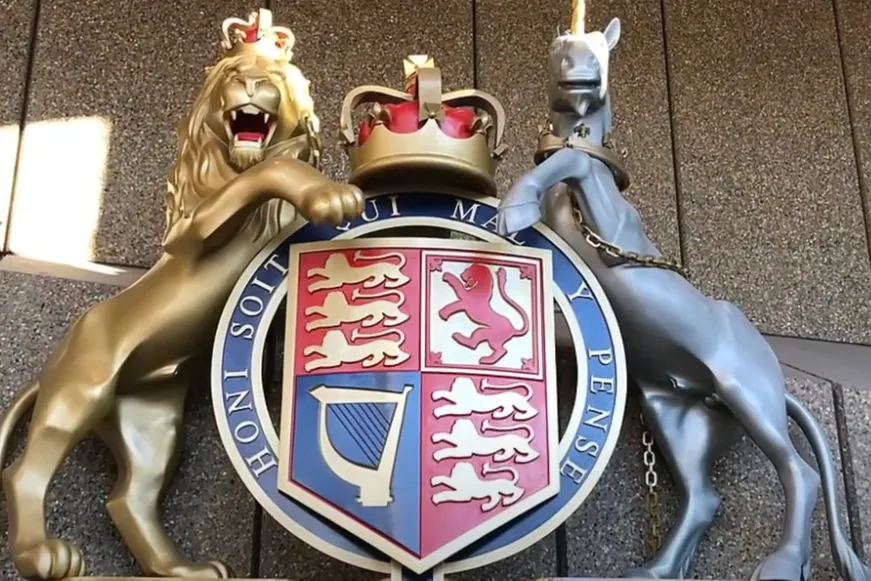
Furthermore, this hereditary monarchy is clearly illustrated in the history of the people of Europe and beyond, the white race. Everyone knows (or should know) that the British royal family (and other royal families) can trace its genealogy back to King David.
God not only will deliver His trusting people out of their difficulties in due time, but will give them grace to bear up under their trials in the meantime. Give the Almighty God of Israel the glory of all the deliverances and advancements of His Kingdom. Amen.