The Psalms - Psalm 89
The Davidic Covenant
by Rev. Jim Jester
March 15, 2026
SCRIPTURE READING: Luke 1:32-33
“He [JESUS] shall be great, and shall be called the Son of the Highest: and the Lord God shall give unto him the throne of his father David: 33 And he shall reign over the house of Jacob for ever; and of his kingdom there shall be no end.”
INTRODUCTION
The title of this psalm is “A Contemplation of Ethan the Ezrahite.” There are several men named Ethan in the Scriptures, but this man is mentioned specifically in 1 Kings 4:31 as someone who was famous for his wisdom, but surpassed by Solomon’s greater wisdom. Ethan is probably identical with Jeduthun, who founded one of the three choirs authorized by King David.
The prime idea around Psalm 89 is the Davidic Covenant. The Davidic Covenant guarantees the existence of David’s family throughout history and brings into view the ultimate kingship of the Lord Jesus Christ. It is unbelievable how most theologians today make little comment or study of this covenant. Most systematic theology books used in Bible colleges and seminaries make no mention of it. It is almost as if the Davidic Covenant had no place in the Word of God. Is there no interest in the concept of covenant; or worse, is the whole idea being purposely ignored by a majority of theologians? And why? Is it because a serious interest in this topic will lead them to discover their identity as Israelites? I would say so.
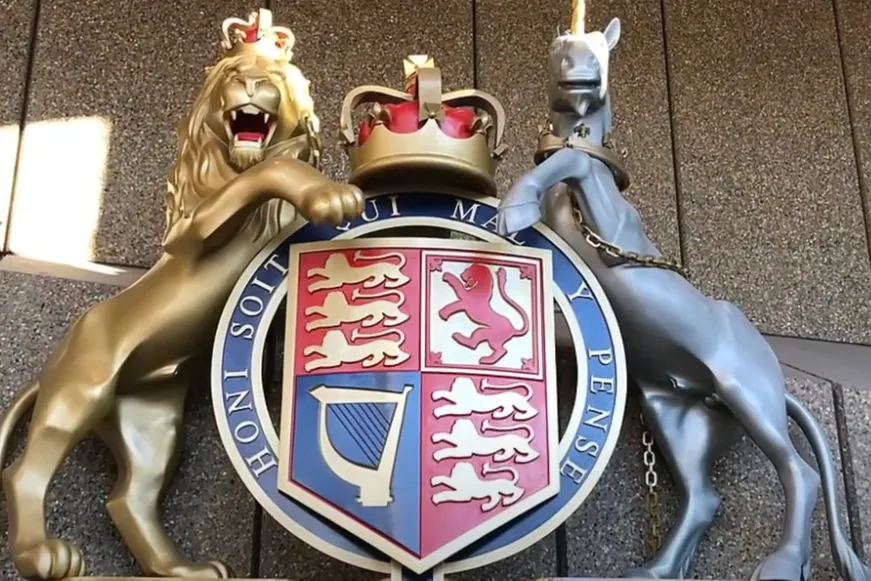
Then there is the fact that the queen of England can trace her ancestry back to King David. The record is in the British museum. How many people in America know about this? Again, this is another fact that leads to the identity of the Anglo-Saxons as Israelites. For myself, my cousin did some research and discovered that the Jester family descended from King Henry III, my 23rd great grandfather. And with the current Queen Elizabeth, 23rd cousins once removed. It is likely that most White people have a similar connection to the Davidic Covenant.
The gospel that Jesus and the disciples preached is called the “Gospel of the Kingdom” (Mat. 1:23; 9:35; Lk. 8:1). One should ask, “What kingdom could that be?” This Gospel of the Kingdom calls for the installation of Jesus Christ as a theocracy on this earth. The Davidic Covenant is central to the whole concept of the Gospel of the Kingdom. Many spiritualize this kingdom as being only in the heart of man, not “on earth” as our Lord has taught us to pray. And this is only the beginning; one would have to overlook myriads of Scriptures to believe such a doctrine.
MERCY AND FAITHFULNESS (v. 1-2):
I will sing of the mercies of the LORD forever;
With my mouth will I make known Your faithfulness to all generations.
For I have said, “Mercy shall be built up forever;
Your faithfulness You shall establish in the very heavens.” (Ps. 89:1-2, NKJV)
I will sing of the mercies of the LORD: Ethan began this psalm with a declaration of praise in song, focused on the mercies of God. Since God’s lovingkindness lasts forever, so the praise of Him should be sung forever.
Will I make known Your faithfulness: Ethan not only experienced the mercies and faithfulness of God; he also wanted to make this known to his own people, that is, “all generations” of Israelites.
Mercy shall be built up forever; Your faithfulness You shall establish: Ethan noted the permanent, enduring character of God’s mercy and faithfulness, and how God had established these things.
The word “mercy” is an important word in 2 Samuel chapter 7:
13 He [David] shall build an house for my name, and I will stablish the throne of his kingdom for ever. 14 I will be his father, and he shall be my son. If he commit iniquity, I will chasten him with the rod of men, and with the stripes of the children of men: 15 But my mercy shall not depart away from him, as I took it from Saul, whom I put away before thee. (2 Sam. 7:13-15)
David had the desire to build a more permanent house for God, rather than using a tent. But God said, with a play on words about this house David would have built, “Wait a minute David, I’ll build you a house—a living house!” In other words, God would bless David with many descendants to continue to fill his throne and his kingdom. “Incline your ear, and come unto me: hear, and your soul shall live; and I will make an everlasting covenant with you, even the sure mercies of David” (Isa. 55:3).
GOD’S COVENANT WITH DAVID (v. 3-4):
“I have made a covenant with My chosen,
I have sworn to My servant David:
‘Your seed I will establish forever,
And build up your throne to all generations.’” (Ps. 89:3-4, NKJV)
I have made a covenant: As an expression of the mercies and faithfulness mentioned in the previous verses, Ethan noted the covenant God made with David as described in 2 Samuel chapter 7. Ethan’s mention of the covenant shows it was public knowledge in the days of David and Solomon. People knew what God promised to David, and they understood that Solomon fulfilled it only partially.
Your seed I will establish forever: God promised David, “I will set up your seed after you, who will come from your body, and I will establish his kingdom” (2 Sam. 7:12). This promise was partially fulfilled in Solomon, the direct son of David and immediate heir to his throne. It would be most perfectly fulfilled in the One known as the Son of David—the Messiah, Jesus Christ (Mat. 12:23).
And build up your throne to all generations: God promised David, “I will establish the throne of his kingdom forever” (2 Sam. 7:13). The pledge to David is extended to his descendants: “All generations” means all generations of Israelites.
COVENANT PROMISES REPEATED (v. 30-37):
“If his sons forsake My law
And do not walk in My judgments,
If they break My statutes
And do not keep My commandments,
Then I will punish their transgression with the rod,
And their iniquity with stripes.
Nevertheless My lovingkindness I will not utterly take from him,
Nor allow My faithfulness to fail.
My covenant I will not break,
Nor alter the word that has gone out of My lips.
Once I have sworn by My holiness;
I will not lie to David:
His seed shall endure forever,
And his throne as the sun before Me;
It shall be established forever like the moon,
Even like the faithful witness in the sky.” (Ps. 89:30-37, NKJV)
If his sons forsake My law: All of those in David’s royal line had some part of this covenant. Some of these were disobedient kings, and God brought considerable correction to both the kings and the kingdom. The nature of the Davidic Covenant is unconditional; nothing that anyone does or fails to do will abrogate this covenant.
My lovingkindness I will not utterly take from him: As described in this covenant, God would never completely take His covenant love from the house of David (2 Sam. 7:14-16). He would remain faithful to His word.
I have sworn by My holiness: God here pledges the crown of his kingdom—Holiness—the essence of his nature. As if to say, that if he ceases to be true to his covenant he will have forfeited his holy character. Certainly, there is no stronger language to express his unchanging commitment to this promise.
His throne as the sun before Me; it shall be established forever like the moon: God’s promises to David regarding his royal house and the reigning Messiah to come from that house were constant, like the sun and moon, “the faithful witness in the sky.”
THE COVENANT AND THE CRISIS (v. 38-39):
But You have cast off and abhorred,
You have been furious with Your anointed.
You have renounced the covenant of Your servant;
You have profaned his crown by casting it to the ground. (Ps. 89:38-39)
But You have cast off and abhorred: The first 37 verses of this psalm soared with confidence in God’s incomparable greatness and in His covenant to David. Here, the tone suddenly shifted as Ethan considered some present crisis, which seemed to be all the worse when contrasted with his understanding of God’s faithfulness.
Some believe Ethan wrote during the early reign of Rehoboam after Solomon’s death. The crisis that stressed him so was likely centered around the invasion of Shishak. From 2 Chronicles, chapter 12:
And it came to pass, when Rehoboam had established the kingdom, and had strengthened himself, he forsook the law of the LORD, and all Israel with him. 2 And it came to pass, that in the fifth year of king Rehoboam Shishak king of Egypt came up against Jerusalem, because they had transgressed against the LORD, 3 With twelve hundred chariots, and threescore thousand horsemen: and the people were without number that came with him out of Egypt; the Lubims, the Sukkiims, and the Ethiopians. 4 And he took the fenced cities which pertained to Judah, and came to Jerusalem. (2 Chr. 12:1-4)
No wonder Ethan was upset—“Lord, where are you?” Sometimes we often have said the same thing when awful things happen in our country. Farther down in the account from 2 Chronicles, chapter 12, we find that because they humbled themselves, God did not destroy them, but granted them some relief. Great are the mercies of our God.
Great mercy is found in our Lord Jesus Christ—remember that God “cast off and abhorred” His Son while on the cross in order to redeem His people.
You have renounced the covenant…You have profaned his crown by casting it to the ground: Ethan’s words here seem a shocking contradiction to what he wrote earlier in the psalm, in which he demonstrated the full confidence of faith and the report of his feelings. Ethan knew God had not renounced the covenant, but in the present crisis it sure felt like it. But Ethan’s experience and feelings didn’t negate his faith.
To think that God has allowed such disaster is painful. However, it’s even more painful to think that God had nothing to do with it, and we are at the mercy of random events, fate, and luck.
A PLEA FOR RESCUE (v. 46-48):
How long, LORD?
Will You hide Yourself forever?
Will Your wrath burn like fire?
Remember how short my time is;
For what futility have You created all the children of men?
What man can live and not see death?
Can he deliver his life from the power of the grave? (Ps. 89:46-48, NKJV)
How long, LORD? Ethan couldn’t bear the idea that the crisis would last much longer. He poured out his plea to God, who seemed to be hiding and angry with Israel and her king.
Remember how short my time is: Perhaps Ethan prayed this on behalf of the weary king, or perhaps he longed to see the king and kingdom vindicated in his lifetime, perhaps in his old age. The mention of shortness of time adds a sense of urgency to his prayer.
Can he deliver his life from the power of the grave? The answer to this rhetorical question is of course, no. No mere man can deliver his own life from the grave. Men often wish to forget their complete dependence upon God and the life to come, but the psalmist urged us to remember it often.
There has only been One with the power to deliver his life from the power of the grave—Jesus Christ. Jesus promised to raise his own body after three days in the grave (Jn. 2:19).
A PRAYER FOR RESTORATION (v. 49-51):
Lord, where are Your former lovingkindnesses,
Which You swore to David in Your truth?
Remember, Lord, the reproach of Your servants—
How I bear in my bosom the reproach of all the many peoples,
With which Your enemies have reproached, O LORD,
With which they have reproached the footsteps of Your anointed. (Ps. 89:49-51, NKJV)
Lord, where are Your former lovingkindnesses? Ethan again made heartfelt inquiry from a season of crisis. The request shows that he would not allow himself to stay in the belief that God had cast them off or renounced His covenant. He could still appeal to God on the basis of what God promised to David.
Remember, Lord, the reproach of Your servants: Ethan asked God to notice the low and despised state of the people, and to act in mercy in light of the seeming triumph of God’s enemies, who were also enemies of the anointed king. The Biblical Illustrator had this to say about the psalmist:
This psalm is one of the very choicest songs in the night. Midst a stream of troubled thoughts there stands a fair island of rescue and redemption…The writer was bearing bitter reproach, and was almost broken-hearted by the grievous calamities of his nation. Yet his faith was strong in the faithfulness of God, and so he sang of the stability of the Divine covenant when the outlook of circumstances was dark and cheerless. Nor did he ever sing more sweetly than he sang in that night of his sorrow.
A PRAISE (v. 52):
Blessed be the LORD forevermore!
Amen and Amen. (Ps. 89:52, NKJV)
Blessed be the LORD forevermore: Ethan concludes this song with a confident declaration of praise. This came from a man who knew God’s promises and trusted them, all while pouring out his pain to God in his distress.
This final verse is a doxology, most likely added to mark the end of Book Three of the Psalms. Each of the five books ends in a similar way.
CONCLUSION
To Ethan, it looked like the covenant had failed; that God was not fulfilling the promise to establish David’s seed forever. It was in the reign of Rehoboam when the ten tribes had forsaken their allegiance to David’s dynasty and so the promise of the preservation of David’s throne seemed suddenly revoked.
But remember, God’s promise wasn’t revoked, and the kingdom would continue. Later, Paul speaks of this;
That at that time ye [the Ephesians of the ten tribes] were without Christ, being aliens from the commonwealth of Israel, and strangers from the covenants of promise, having no hope, and without God in the world: 13 But now in Christ Jesus ye who sometimes were far off are made nigh [near] by the blood of Christ. (Eph. 2:12-13)
The Davidic Covenant is a covenant of which God alone takes all the obligations upon Himself. David is God’s chosen one (1 Chr. 28:4); but the terms of the covenant do not depend on the performance of David and his posterity. Regardless of any conditions, God has sworn to His servant: “I will establish your seed forever” (Ps. 89:4; cf. 2 Sam. 7:12-13). There is coming a day when Jesus the anointed will sit on this throne, “And he shall reign over the house of Jacob for ever; and of his kingdom there shall be no end” (Lk. 1:33).