The Greatest Intellectual Property Theft of All Time
by Harald Zieger
July 5, 2026
I would like to start my presentation today with a bible based traditional German Expression: Unrecht Gut gedeiht nicht. Unrecht Gut kommt nicht auf den dritten Erben.” This German Expression is a combination of two older proverb traditions
Proverbs 10:2
Treasures of wickedness profit nothing: but righteousness delivereth from death.
does not reach the third heir — belongs to a related European, especially Latin-medieval, proverb tradition. The Latin form is something like: “De male quaesitis non gaudet tertius haeres” — meaning: The third heir scarcely/does not enjoy what was badly acquired.
Proverbs 10:2
ILLEGITIMATE PROPERTY DOES NOT PROSPER AND DOES NOT PASS TO THE THIRD HEIR.
The Latin form is something like: “De male quaesitis non gaudet tertius haeres”
THE GREATEST GOVERNMENT–ORGANIZED PATENT AND INNOVATION THEFT OF ALL TIME
With the theft of hundreds of thousands of German patents and inventions, the USA achieved an absolutely unprecedented coup after the end of World War II. Its effects are still clearly noticeable in the 21st century. In his book:
>Unternehmen Patentraub 1945<
>Operation Patent Theft 1945<
Friedrich Georg asks and tries to answer the following questions:
- Would the USA, despite its overwhelming victory in 1945, have declined to a second-rate technological nation without the intellectual plunder of Germany?
- Did US President Truman, aware of the USA's shortcomings, grant his occupying forces a de facto "license" to steal all usable German inventions?
- Was the scientific and technological superiority of the Germans already known in Washington, and had the general staff therefore begun planning for "Operation Patent Theft" early on?
- How did the systematic persecution of Germany's intellectual property, as well as its researchers and engineers, really unfold?
- Is it true that German inventors who refused to divulge secrets were still threatened with the death penalty in 1948?
- Is the number of patents seized in Berlin in 1945 demonstrably understated?
- Why was Professor Ferdinand Porsche so important?
- What secret still lies hidden in the mass importation of top German scientists to the USA for research?
- How did important future technologies like magnetic tape, computers, television, and transistor technology actually came about?
- Was Leuna's synthetic gasoline production a cause of war?
- Was President Bush's sensational space bomber really so new?
- Is the value of the patents and inventions taken from Germany by the USA so astronomical that nobody in business or politics is allowed to talk about it today?
Since we do not have 20 hours to look into every question, I will focus on just a few today.
Why German patents and developments were so important for the USA
At the end of the 1930s, the system of free world trade, embodied by its leading power, the USA, faced major challenges from authoritarian, economically successful power blocs. Even more threatening for the defenders of the old order was the fact that they were even in danger of losing.
The government of the Third Reich had abandoned the gold standard and introduced the "labor currency." To this end, bilateral trade agreements on a clearing basis were concluded with 25 countries around the world.
A pure barter system emerged, with modern German industrial products being exchanged for necessary raw materials and foodstuffs.
The dollar and pound sterling were largely rendered obsolete, which significantly impacted the Wall Street elites. The German system functioned extremely well, and there was a risk that other countries would adopt this approach.
Germany's trade bloc was particularly dangerous because it was complemented by a very successful domestic production of gasoline, diesel, rubber, and textile fibers. A plethora of new patents and inventions further aroused suspicion and envy.
Danger also threatened the "Western system" as we know it today from another direction: What would happen if authoritarian economic systems succeeded in proving that the "irrevocable link" between liberal democracy and prosperity, still considered valid today, was a mere fluke? As statements by leading American officials prove, the Second World War was also about the fact that US industrial dominance could not develop in the post-war period without the prior dismantling of the German economic system. Proof of scientific secondary importance the USA 1945/46: title page and P. 6 of the KILGORE report.
The Chairman of the Subcommittee, Mr. Kilgore, correctly noted that after the end of the Second World War, no nation was stronger than their scientific resources and that there was evidence that humanity was on the threshold of a time of great possibilities. American science was not at all equipped for this, as was brutally revealed to the Senate. People were horrified to discover that virtually no basic scientific research had been conducted in the United States during the war years, even though the national research budget had increased from the prewar level of $300 million to over $800 million in 1944.
In late summer 1944, after the Allies, with the help of German traitors, had successfully gained a foothold in Western Europe, the American Attorney General Francis Biddle let the cat out of the bag. Biddle told a Senate committee bluntly what should be done with the German economy: "These German industrial companies concluded the very contracts we have to deal with. The period between the wars was merely an armistice, which German companies used to wage economic warfare against us."
The government of the Third Reich abandoned the gold standard and introduced the "labor currency." To this end, bilateral trade agreements based on clearing were concluded with 25 countries worldwide. A pure barter system emerged: modern German industrial products in exchange for needed raw materials and foodstuffs.
The dollar and pound sterling were largely rendered obsolete, which significantly impacted the Wall Street elite. The German system functioned extremely well, and there was a risk that other countries would adopt this approach.
Germany's trade bloc was particularly dangerous because it was complemented by highly successful domestic production of gasoline, diesel, rubber, and textile fibers. A plethora of new patents and inventions further fueled suspicion and envy.
As it turned out at the end of the war in Europe, this existed danger actually almost to the end. That was an unbelievable game of chance, which was mainly good for the USA with the help of German traitors came to an end!
This threat had to be eliminated. The physical occupation of Germany—however many victims it claimed among soldiers on both sides and the civilian population—was what ultimately enabled the establishment of an American controlled and dominated "free market order."
Immediately after the failure of the German Ardennes Offensive in January 1945, General Eisenhower therefore requested the creation of a task force for his Financial Branch at SHAEF the creation of a task force of experts to uncover the plans of German industry and prevent their further intentions in the post-war period.
The U.S.A. technology deficit and its unconventional solution Indeed, it now appeared that America's economic superiority, the fulfillment of the American "Manifest Destiny," and the "American experience" were the key to the future.
"Manifest Destiny" refers to nothing other than the doctrine of the expansion of the USA across the American continent and, later, the worldwide spread of the American system. Behind the scenes, however, leading economic and military circles in the USA probably knew at the time of this triumph that they had been outrageously lucky.
After a careful study of the true state of American science, a specially appointed subcommittee of the US Senate Military Committee in 1946 could not share this optimistic opinion regarding either the present state or the future of American science.
On the contrary, an objective analysis of American military science led to some truly disturbing conclusions. It was noted with dismay that practically no basic scientific research had been carried out in the USA during the war years, even though the national research budget had increased from the pre-war level of $300 million to over $800 million in 1944. During the war, US scientists had instead focused solely on finding profitable applications for previously discovered scientific principles.
Even worse was the fact that the scientific discoveries applied by US scientists during the war were mostly made not by Americans, but in Europe. It was sobering to discover that the revolutionary sulfonamides were discovered in German research laboratories, atomic fragmentation in Berlin, and that the foundational work for radio and radar, as well as the enormous American electronics industry, was the work of a German professor. Penicillin came from England, and even DDT, so often portrayed in propaganda as a purely American invention, actually came from Germany and Switzerland.
As an example, Professor Hans Erich HOLLMANN (and not the Englishmen RANDALL and BOOT) was the real inventor of the later so famous multi-chamber Magnetron. Hans Erich Hollmann had an earlier German-priority / Telefunken patent for a magnetron of the multi-cavity or multi-chamber family, well before Randall and Boot’s 1940 Birmingham work. The strongest primary evidence is US Patent 2,123,728, “Magnetron”: it lists Hollmann Hans Erich as inventor, Telefunken AG as assignee, a priority date of 1935-11-29, US filing on 1936-11-27, and publication/grant on 1938-07-12.
But, a long time after that first shot - after we had gained the upper hand over our enemies with considerable difficulty - we found ourselves in scientific no-man's land … Of course we won this war, but we have to work on it. Remember that we had a lot of luck on our side." At the end of his lecture, Col. WATSON asked his audience: "Do we want to trust luck again?" And Col. Donald L. Putt, who was in charge of exploiting German scientific secrets, expressed it similarly: "The Germans were ahead of us, in some areas by between two and fifteen years."
"It must be said here that the Germans were ahead of us in many areas, such as rockets, guided missiles, jet engines, jet aircraft, synthetic fuels, and supersonic research. The German developments in these areas are now of the utmost importance to us. They enable us to achieve hitherto unheard-of speeds in air transport, to consider later flights high in the stratosphere, and one day even to consider interplanetary travel.
Thus, we might ask whether, in possession of this information, we should continue to burden American taxpayers with time and money, or whether, if we are not too proud, we should rather exploit the information generated in Germany. The American industrial apparatus is called upon to begin where the Germans left off and to provide us with the necessary equipment so that we can become leaders in the scientific world."
How the “Patent Robbery Enterprise” was organized
"Developing ideas is expensive, stealing them is cheap" Andrew Gowers, Head of Communications and Marketing (of) Lehman Brothers
As early as May 14, 1945, the Joint Secretary of State (JCS) had written to the State Department that the knowledge gained from previous investigations should now be distributed to American businessmen and industry. What was lacking, however, was official White House approval for these commercial exploitation activities involving German intellectual capital.
Executive Order 9604
1. It is the policy of this Government, subject to the requirements of national military security, that there shall be prompt, public, free and general dissemination of enemy scientific and industrial information. The expression "enemy scientific and industrial information," as used herein, is defined to comprise all information concerning scientific, industrial and technological processes, inventions, methods, devices, improvements and advances heretofore or hereafter obtained by any department or agency of this Government in enemy countries regardless of its origin, or in liberated areas, if such information is of enemy origin or has been acquired or appropriated by the enemy.
It was nothing less than commercialized robbery of technology without limits, because TRUMAN defined the term "scientific and industrial information" as all information encompassing scientific, industrial, and technological processes, inventions, methods, devices, improvements, and advances, captured by U.S. agents in enemy countries before or after the issuance of Executive Order 9604, regardless of where that technology originated.
The Frankfort Documents Conference
Sort, Divide – and Destroy
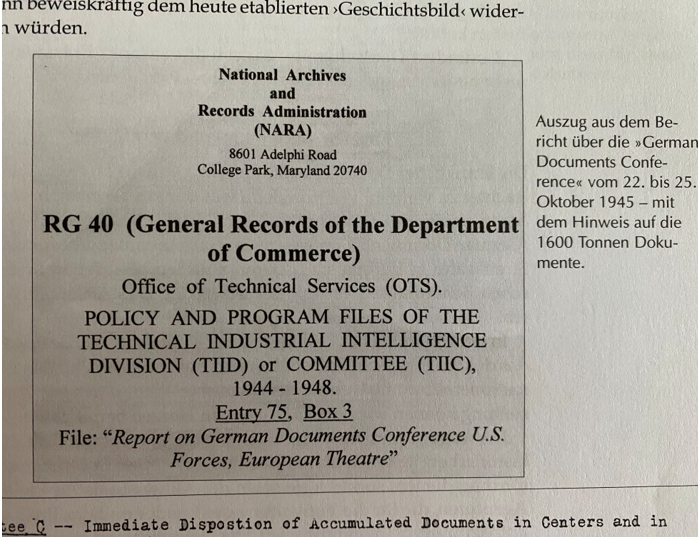
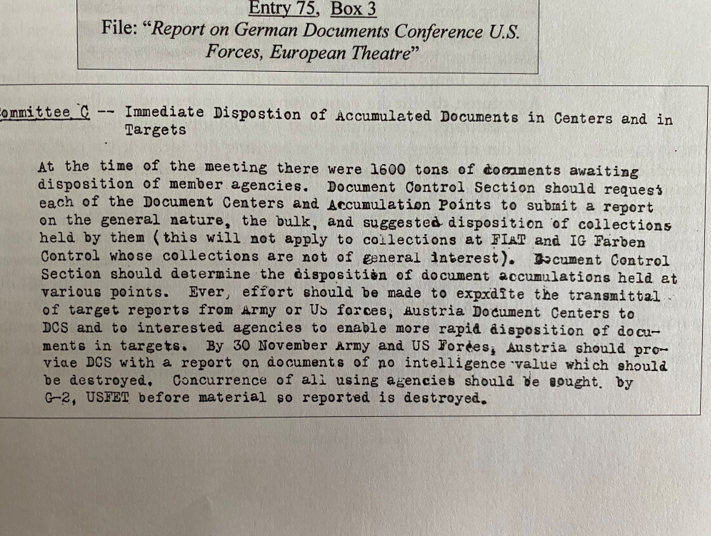
The Frankfurt Documents Conference deserves closer examination. Much of what happened then still influences how we see the world today. From October 22nd to 25th, 1945, the German Documents Conference took place at the headquarters of the American armed forces in Europe. All civilian and military authorities involved in the occupation of Germany participated.It is also necessary for this conference to consider the overall problem of the denial of certain archies, records and papers to the Germans.
Serious considerations must be given to plans for the organized destruction of papers which poses no value for/to the allies and which must be denied to the Germans.
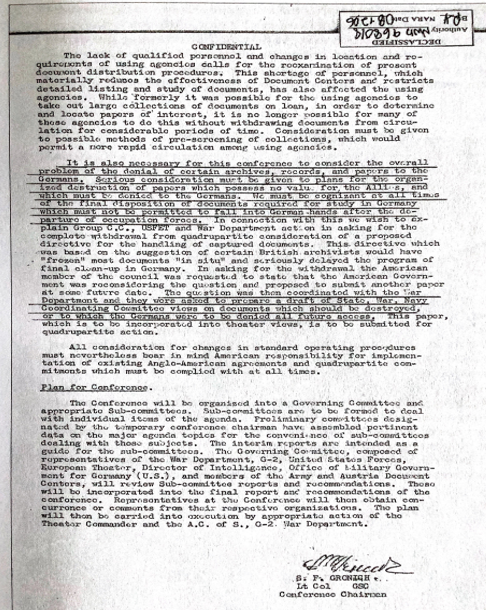
"We must be cognizant at all times of the final disposal of documents required for study in Germany which must not be permitted to fall into German hands after the departure of the occupation forces. It was then coordinated with the Armed Forces on documents which should be destroyed and to which the Germans were to be denied all future access."
All of this shows that it is difficult to cope with the enormous quantities of captured documents (1,600 tons in the document centers alone) it was also a matter of systematically destroying or taking away documents that could be harmful to the Allies and useful to Germany. It appears that a large number of such documents were denied to the Germans in order to maintain the post-war view of things desired by the Allies to this day (HOLOCAUST?). This is clear in the published documents for the document conference in Frankfurt/M. held. Apparently people are still afraid to admit the truth to this day.
From now on, no one can deny that there was an operation organized by conferences to destroy and refuse documents that could be politically and economically useful for Germany's post-war period.
League of Thieves
BIOS (British Intelligence Objectives Subcommittee) was the British counterpart to FIAT. Numerous BIOS reports still serve today to document German high technology during the Second World War.
FIAT (Field Intelligence Agency, Technical) was the special American instrument for acquiring German knowledge in the field of industrial research. Headquartered in Frankfurt, the "collectors and hunters" were a department of the TUB. FIAT was particularly notorious and hated by the Germans. Belgians and Dutch also undertook industrial espionage missions in Germany using FIAT identification cards.
The TUB (Technical Industrial Intelligence Branch) was later renamed TUC (Technical Industrial Intelligence Committee). Initially an agency of the American Joint Chiefs of Staff, the TUB was incorporated into the American Department of Commerce in January 1946, reflecting its importance. His task was to critically examine all areas of the German industrial landscape and to secure any information that could be advantageous to American economic interests.
During 1946, the TUB/TUC sent over 400 so called investigators to Germany. Many of these industrial experts worked at the expense of their own companies and were sworn in as temporary government employees.
OSS (Office of Strategic Services) Today the CIA, the EEIS (Enemy Equipment Investigation Service) secured German weapons and military equipment such as aircraft, tanks, binoculars, ammunition, and metalworking equipment to ensure their testing and the instruction of Allied personnel.
ALSOS' mission searched for the atomic bomb in Germany and suitable detonators. ALSOS also had counter-propaganda tasks, which have now been forgotten. CIOS (Combined Intelligence Objectives Subcommittee) was established on August 21, 1944, by the Joint Anglo American General Staff (CCS). It was intended to ensure military-civilian cooperation among the most important economic, military, and political bodies of the countries for their mutual benefit. The word "exploitation" appears for the first time as an operational term at CIOS. Translated, this means "exploitation" and "sucking dry," and accurately describes what was meant.
THE SOLUTION FOR THE US TECHNOLOGY DEFICIT
Naval Technical Mission, Europe, originally part of the ALSOS mission, soon developed a life of its own, as it focused not only on naval and air force facilities but also on German industrial advancements such as synthetic fuels and lubricants that could be of interest to the American Navy. The shipping ports used were Bremen, Bremerhaven, Naples, Genoa, Rotterdam, Antwerp, Le Havre, Cherbourg, and Marseille. By November 1945, US naval personnel had already shipped 9,400 tons of captured technology to the USA, including 350 tons from a mine in Luxembourg. In Ludwigshafen, an entire factory was dismantled and loaded onto ships.
And all of this was just the beginning of a GOLDRUSH in Foreign Property Activision!
Since the Reich Patent Office was located in the American sector, the first American specialists arrived as early as June 2, 1945. Now a different wind blew through the venerable old building. Colonel Richard Spencer, who worked at the Patent Office in Chicago in his civilian life, had all the files reviewed. Colonel Spencer knew how important the patent registration files were.
He had all the important files photographed. In the first month alone, 30,000 meters of microfilm were photographed and transported to the USA. The relentlessly efficient US specialists were able to ship another 3,000 tons of patent material to the USA in the following months.
On July 26, 1946, in London, 28 states agreed to grant their own citizens perpetual licenses for all German patents and trademarks. In practice, this meant that German companies were not allowed to sell their own products in these countries if they bore their own trademark and were based on their own inventions.
Only the neutral states of Sweden, Switzerland, Spain, and Portugal did not join this collective plunder, but even this had no practical significance, because license fees had to be paid continuously for patents and trademarks, and no German received any foreign currency from the victors for this purpose.
The damage was unimaginable. We will discuss this further later. Until now, it was generally accepted that the victorious powers confiscated 346,000 German patents after the war, including approximately 200,000 foreign patents and 146,000 domestic patents. In addition, there were 20,870 German trademarks and 50,000 new color formulas that IG Farben had not yet been able to register with the patent office.
However, new research has unearthed three documents from the Office of Technical Services dated April 2, 1947, which indicate that these high figures, considered by skeptics to be mere fantasy, were actually far too low.
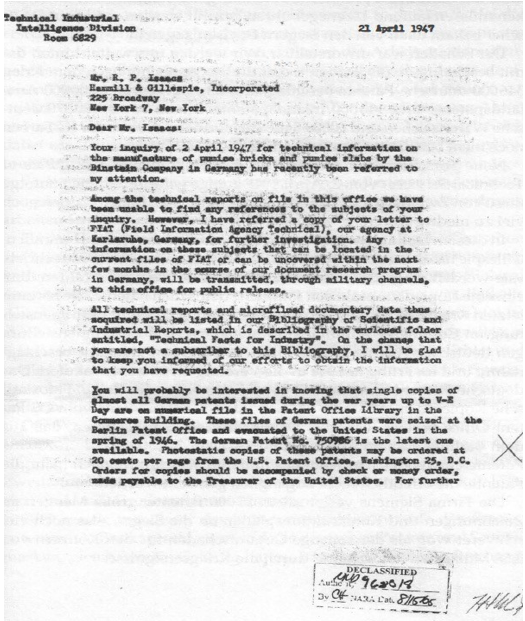
This document concerns an inquiry from the firm of Hammill & Gillespie regarding German patents. The American authority wrote,
"You will probably be interested to know that individual copies of virtually all German patents issued up to the last day of the war are compiled in a complete set in the Commerce Building.
The sets of German patents were seized from the Berlin Patent Office and evacuated to the United States in the spring of 1946. German patent number 750986 was the last in the series. Photostatic copies of these patents can be ordered from the OS Patent Office for 20 cents per page."
This officially proves that not 344,600, but 750,986 patents were stolen from the Berlin Patent Office by the USA. However, this still did not include the patents that were not made publicly available.
Siemens alone lost 25,000 patents, large quantities of drawings and construction plans to the victors, which weighed even more heavily than the overall damage to the corporation of 2.58 billion Reichsmarks due to the war.
The exploitation did not end there. Even after the war, England demanded the free surrender of all German patents that had been patented in the postwar years.
By surrendering these patents and inventions, the German people have in reality already made a reparations payment such as no other nation in the world has ever raised before. This fact is mostly, more or less deliberately, overlooked abroad. Conrad Adenauer German Chancellor 1947
Near Bad Culberg (Thuringia), American special forces seized a treasure of a special kind at Heldberg Fortress. It consisted of 204 cubic meters of files from the RLM (Reich Air Ministry).
These important documents were transported to the USA in sacks.
Among them were information about the latest developments of the Krieghoff company in Suhl in the field of air armaments and other technical developments that promised the captured forces a years-long technological advantage in the arms industry. This was all the more interesting because these documents were also located in an area that was assigned to the Soviet occupation zone.
This document from the TIID proves that at least 750,986 patents were transferred from the Berlin Patent Office to the USA. The text indicates that there were also more patents that were not publicly accessible.
Although no effort was spared and every last corner of occupied Germany was scrutinized, doubts remain to this day as to whether everything was subsequently found.
One report pointing in this direction concerns the incredible extent of microfilming, as reported to the Allies by the German prisoner of war, Kurt Kreutzfeld. Kreutzfeld wrote that an agency was founded specifically for the microfilming of important technical and political documents under the control of Colonel SAUER in Berlin and had its office at Potsdamer Str. 88.
The agency came under the control of Speer's Ministry of Armaments but also copied all the important documents of the SS Main Office. After the first heavy attacks on Berlin in 1943, it was decided to hide three or more series of copies at various distribution points, probably in southern Germany.
SECRET TO THIS DAY: THE FILES OF THE REICHSPOST RESEARCH INSTITUTE (RPF)
The Reich Postal Research Institute (RPF), founded on January 1, 1937, by Reich Postal Research Minister Dr. Ohnesorge, was one of the most enigmatic and, at the time, probably also most important technology centers of the Third Reich.
They dealt with high-frequency technology and atomic physics for military and industrial purposes, radar programs, television-guided missile and tank control, defense against enemy bombers, infrared night vision devices, follower guidance systems, ionospheric research, radiation measurement, eavesdropping technology, and the encryption and decryption of secret codes.
It is interesting that the Reichspost Research Institute also worked in areas where, according to the currently widespread official historical narrative, the Allies were decisively superior to the Germans: high-frequency technology, radar, nuclear physics and espionage.
The majority of the files, comprising 750 patent applications, survived the war in the basement of the "Deutschlandhaus," the Berlin radio station on MasurenAllee. However, important research files and notes on the agreements with the representatives of the various branches of the Wehrmacht did not survive.
They fell into the hands of the Allies at the end of the war, and some are said to still be in the custody of the NSA (National Security Agency) at Fort G. Meade, Maryland, as former secret wartime documents.
Many of the former RPF scientists continued working on mostly the same topics after 1945 - only for different, non-German clients.
In search of Kammler's 55 treasure: Armed U.S. expedition to Czechoslovakia 1946.
SS General Dr. Hans Kammler had, bypassing the usual industrial, scientific and military channels, decided to move the most critical research organizations under the control of the SS. This mainly to reduce sabotage and treason, thus moving highly sensitive research projects out of the focus of the allied intelligence services.
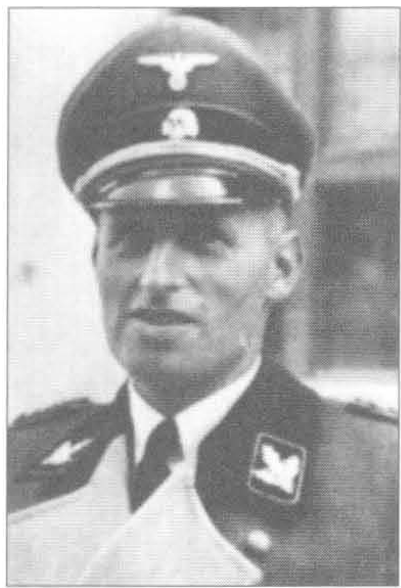 Hans Kammler, pictured here in the summer of 1943, had been one of the leading figures in the German rocket program since the assassination attempt on Hitler on July 20, 1944.
By the end of the war, a completely new research, production, and control structure for scientific findings had emerged, bypassing or replacing the normal channels of German research. At the end of its active period, the Kammler group thus sat upon a vast trove of microfilm containing knowledge of the most revolutionary German research secrets.
These included, among other things, atomic technologies for propelling aircraft, Guided missiles, cyclotrons, and laser projects.
Hans Kammler's secrecy was so successful that the Allies, or technocrats, had absolutely no idea about the Kammler group when they invaded Germany in the spring of 1945.
The 55-year-old general was known to them until then only as an important man in the rocket armament. As the general told his wife, the Americans had already made him an offer to build a rocket industry in the USA. Apparently, Kammler died at the end of the war. Another supposition that was never confirmed
When, finally, in July 1945, it was learned from the head of the Reich Research Council, Prof. Dr. Osenberc, that there was another parallel think tank
SS General Dr. Hans Kammler had, bypassing the usual industrial, scientific, and military channels, created his own organization, the Kammler Group. Its function can best be compared to a modern-day think tank. It was located at the Skoda Works in Prague.
The foolish behavior of the commanding US officer had previously led to the handover of crucial files on German rocket research to the Russians during the transfer of the Skoda works from the US Army to the Soviets. At least two US intelligence missions were subsequently sent to Skoda, but despite the cooperation of German and Czech Skoda employees, they were unable to obtain more detailed information due to close surveillance by Eastern intelligence agents.
The relevant intelligence information about this period is to this day largely redacted. However, researcher Henry Stevens discovered on a legible page of the relevant US government microfilm that it suggested an investigation into 2.5 million Skoda documents on microfilm in three caves immediately east of Srpska (L-5863), in case the Americans were not satisfied with the completeness of the investigations conducted so far.
Representatives of the Allied intelligence services had already targeted the Junkers works in Dessau during the war. During the Third Reich, the Junkers works had grown into one of the most important German armaments companies. Intensive work was carried out here on the development of aircraft and the most modern engines. Shortly after Germany's surrender, a group of American aviation experts were flown into Dessau, which had been captured shortly before, including the prominent transatlantic aviator Charles Lindbergh. The Allies had immense respect for the former German Luftwaffe. One of their demands for the post-war period was therefore that Germany should never again be able to build its own air force.
Although the Junkers factories were located in an area designated for handover to the Russian troops, all books in the Junkers library, even rare pre-war literature, were quickly and completely removed and taken to the USA. This seizure operation affected not only the Junkers company, but also other institutions that had played a significant role in the history of the German Luftwaffe, such as the Focke-Wulff company, the German Academy of Aeronautical Research, and the, das German research institute for gliding, the aviation radio research institute and of course the Reich Air Ministry itself.
In the USA, the books and journals removed on behalf of the US Air Force were handed over to the Library of Congress at Wright Field, according to Richard Eells, the leading head of the Aeronautics Division. The first shipment from Wright Field comprised 9,114 aviation books, journals, and articles. An additional 18,000 items from various Air Force literature fields were also handed over to the Library of Congress. This brought the total number of individual publications from German aeronautical research transferred to the Library of Congress to 27,000. It looks very much like some of the books taken away from Germany have already disappeared into dark channels, because Charles Lindbergh alone is said to have taken 17,000 volumes from the Junkers Library to the USA.
Charles Lindbergh, however, was devoted to aviation and its development throughout his life and certainly did not want to contribute to the disappearance of a historically unique collection of books of the highest scientific and cultural-historical significance. And that is precisely what happened. An inspection in recent years revealed that, after examining two-thirds of the aviation collection in the American Library of Congress, only about a dozen volumes containing inscriptions from German aviation institutions remain. The remaining approximately 26,000 books, journals, and articles are still considered lost in the USA.
Individual items have since resurfaced.
An astronomical amount of loot
To this day, it is not known whether an exact count was ever carried out of how many documents were taken from Germany. Some of these documents consisted of more than a thousand pages; others, such as patent applications, contained only one sheet. The American aerodynamicist von Karman mentioned that approximately three million documents, weighing 1,500 tons, were reviewed and microfilmed in Europe. They merely formed the basis of the Armed Services Technical Information
Agency (ASTLA), from which the Defense Technical Information Center (DTIC) later emerged. If one adds to this the 1,554 tons of classified documents that the Americans brought to the US aeronautical research facility in Wright Field (Ohio), and the approximately 6,000 tons of files that, according to statements in the New York Times, were processed by leading officials such as John C. Green at the Office of Technical Services (OTS), then the number of stolen pages reaches astronomical proportions. Even in 1957, it had not yet been possible to process all the findings, and the unprocessed intellectual reparations from Germany filled large green boxes that were piled up to the ceiling in the halls of the Congress Library. One day it had all disappeared, without anyone ever learning what ultimately happened to the contents of the boxes.
The USA was able to secure the lion's share of "living knowledge.” This is irrefutably established today. Immediately after the end of the war, the Americans initiated the scientific import program "Overcast," which was officially adopted in July 1945. In March 1946, this became "Operation Paperclip.” These >foreign deployments< were not always on a purely voluntary basis. When German scientists and engineers were deemed important enough, they were abducted and forcibly relocated not only by the Russians. The so-called democratic powers, the USA and England, behaved no differently. The victorious powers considered the Germans their legitimate "human spoils.” By taking the German scientists, the Allies violated their own laws.
LET'S HAVE A LOOK OF SOME OF THE SUCCESSFUL DISCOVERIES AS IF TO LEARN A NEW LANGUAGE
The technological knowledge brought back from Germany proved to be so novel that its practical application posed massive problems, especially for commercial users.
As a remedy, a new German-English technical dictionary was created.
By October 1946, it had become apparent that there were no English equivalents for 40,000 German scientific and technical terms.These terms had arisen from entirely new insights that the victors did not yet possess. However, by the time the processing of the German documents was completed, the dictionary had grown to the astounding number of approximately 100,000 new words.
Just a brief Summary listed in two Articles the News Chronicle by Ian Bevan (UK) and the American Magazine by Lester Walker (USA)
Ian Bevan writes in his article:
Among the seized secrets were, for example, inventions and instructions for the production of synthetic fuel, synthetic rubber, synthetic lubricating oil, for the production of synthetic fibers and textiles, diesel engines, optics, heavy printing presses, wind tunnels in which speeds over 8000 km/h were achieved, infrared targeting devices, cassette recorders, electrical capacitors, long-life fruit juices, machines for wrapping cholate, synthetic sapphires for watches, synthetic mica, run-resistant, walk-resistant ladies' stockings, butter churns that produced 1500 pounds of butter per hour, quartz watches, cellulose products, a variety of pharmaceutical products, insecticides, colloids as rust-preventive paints and as a substitute for zinc chromium, artificial leather, plastics, color photography, a vast number of precision instruments, and thousands of other discoveries in the chemical, physical, and technological fields, and electronic fields, in which, according to leading specialists, the Germans were ahead of all other nations by classes—by 5, 10, or even several years—in development.
Lester Walker writes “What did we find”:
The head of communications at TUe for ILM opened his desk and, after asking, "Would you like to see some special items from the wartime secrets collection?", took out of his drawer the smallest vacuum tube WALKER had ever seen. It was only about half the size of a thumb. "Note that it's made of heavy porcelain, not glass, and is virtually indestructible. It's sufficient for a thousand watts—one-tenth the size of a run-of-the-mill American tube. Today, our manufacturers k now the secret of how to do this.”
It must be noted here that the author may have made an error, forgivable given the technical understanding of the time. Why would one enclose a small electronic device that had to regulate 1000 watts (1 kilowatt!) in a heat-insulating ceramic casing? Mr. Walker was shown a solid-state triode, i.e., a transistor.
Next, the journalist saw a German magnetic tape, which was made of plastic and coated on one side with a metallic iron oxide. The Germans had used it to replace phonographic recordings. An entire day's radio program could be recorded onto a single reel. It could be demagnetized and reused as often and for as long as desired. No needle, absolutely no noise or wear. Thus, the tape recorder was also a German invention.
He was also shown infrared devices that the Germans had developed to the point of being operational in tanks and other vehicles, and to the point of successfully integrating them into precision rifles. For the infrared telescope, the Germans had developed a miniature generator (5 inches in size)powered by a flashlight battery. It rotated 10,000 RPM and required the development of a novel lubricating grease made from chlorinated paraffin. The generator then lasted for 3,000 hours of operation.
The Americans had also discovered novel capacitors made of paper and coated with a layer of vaporized zinc 1/52,000 of an inch thick, 40% smaller and 20% cheaper than the American capacitors. They were also self-healing. This meant that if damage occurred, the zinc film vaporized, the paper immediately sealed, and the capacitor functioned again. They could withstand multiple failures, and their performance was 50 percent higher than that of American capacitors.
The zinc layer was 0.1 micrometers (0.0001 millimeters)! Such a thickness is achieved today using PVD (Physical Vapor Deposition) or CVD (Chemical Vapor Deposition) methods. But the PVD method was only used in the 1960s, and the CVD method was only officially developed by the Californian company Genus in 1986 (!).
It looks very much like a reinvention of the German process that the Robert Bosch company had already successfully used for its paper capacitors in the 1940s. Walker had already seen and reported on the corresponding products in 1946.
Then he was informed about the secrets of German silicon production, the basic material for transistors and today's microtechnology. Here, too, the Kaiser Wilhelm Institute achieved the scientific breakthrough in the production of natural, 100 percent pure silicon.
Then came the German secrets in the aerospace sector. The V-2 rockets were merely toys compared to what the Germans still had planned. Lieutenant Colonel John A. Keck used precisely the same words in his communication of June 28, 1945. Certainly, the V-I, V-2, or Me-262 were astonishing high-tech products for the British and Americans at the time, but compared to the Sänger bomber, the A-9/A-10 rockets, or the flying saucers, they were indeed just toys. The Germans had 138 types of guided missiles in various stages of production and development and used every possible known method of guidance and ignition, such as radar, radio, wire, continuous radio waves, acoustics, infrared, light beams, and magnetic methods, to name only a few. For propulsion, they employed all methods that jet propulsion offered for subsonic or supersonic speeds.
WALKER used the term "light beam" when describing rocket guidance methods, which can only be translated as "light ray," which in itself makes no sense.
However, if one considers that laser beams are "special light rays," then the situation is different. A laser beam can indeed guide a rocket to its target. This was actually used by the USA.
We probably have here further evidence of the existence of laser technology in Germany at that time.
WALKER also spoke about another rocket, the A-9. It had a range of 3,000 miles and was manufactured in Peenemünde. It could reach an incredible speed. The words WALKER used here clearly convey the impression that this rocket already existed and functioned.
Aviation Technology
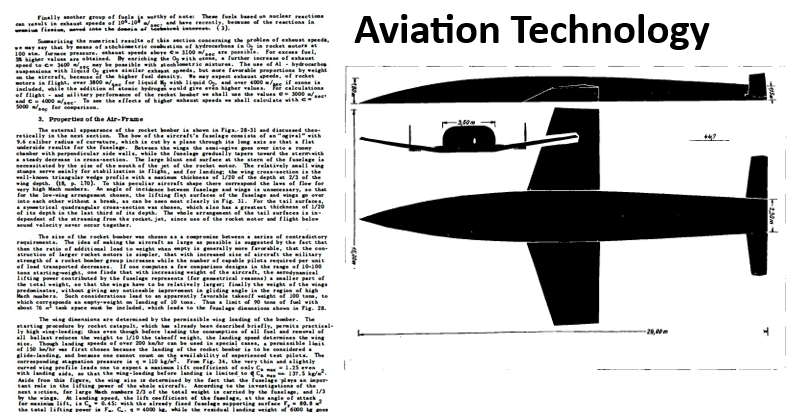
Finally, the Sänger-Bomber was described, whose operational capability was only prevented by the end of the war: a truly unbelievable revelation that has never been contradicted to this day.
As an example I will just increase the writing of paragraph 2 of this engineering
Analysis of the so called Sänger-Bomber
Summarizing the numerical results of this section concerning the problem of exhaust speed we may say that by means of stoichiometry combustion of hydrocarbons in O2 in rocket motors at 100 atm. furnace pressure. exhaust speeds above 3100 m/sec are possible. For excess fuel, 5% higher values are obtained. By enriching the environment with ozone. a further increase of exhaust speed to 3400 m/ may be possible with stoichiometry mixtures . The use of Al – hydrocarbon suspensions with liquid 02 gives similar exhaust speeds. but more favorable proportions by weight on the aircraft, because of the higher fuel density.
We may expect exhaust speeds. of rocket engines in flight over 3800 m/s for liquid H2 with liquid 02, and over 4000 m/s if ozone is included . while the addition of atomic hydrogen would give even higher values. For the calculation of flight and military performance of the rocket bomber we shall use the values C= 3000 m/s and C = 4000 m/s. To see the effects of higher exhaust speeds we shall calculate with the C = 5000 m/s for comparison.
The calculations of the produced thrust of the engines, could push the speed of the Sänger-Bomber to 1,100 Km/h
OEL MARKET COMPETITION
To eliminate any competition for the energy monopoly, the Allied occupying powers, as one of their first measures, prohibited coal hydrogenation:
"The following are hereby prohibited in Germany and declared illegal: ... facilities for the strategic large-scale supply of fuel, oil, and lubricants ... These facilities or structures are to be demolished or removed before or at the time of the end of the occupation." In addition to this excerpt from Control Council Law No. 23 (April 10, 1946, Articles 2 and S), all research into these processes was, of course, also prohibited.
It was not until 1955 that the relevant research was permitted to resume.
The Americans had by then gained complete control of the situation on the world energy market, not only through their military and financial power (dollar as the leading currency for buying oil) but also thanks to the help of the >US Technical Oi! Mission<.
In the following years, the Bureau of Mines had two demonstration coal liquefaction plants (hydrogenation plants) built in Louisiana and Missouri. The USA, with its vast coal reserves, could thus have largely avoided its later dependence on Middle Eastern oil as early as the 1950s. But things turned out very differently, because in 1954 the
Eisenhower administration closed both plants. It is reported that this happened on the recommendation of the National Petroleum Council and other representatives of the petroleum industry. The official reason given was excessively high costs.
Lubrication Technology
German chemists then succeeded in re-synthesizing new oil molecules from existing mineral oil. The newly synthesized oil molecules looked almost like copies of each other and, due to their internal uniformity, performed significantly better in cold weather. Now German tanks could start even in cold weather. As a byproduct of the new process, it was discovered that the new synthetic oil molecules were much harder than conventional oil and still fulfilled their lubricating function at much higher temperatures. After the war, this technology disappeared for 30 years. Then, in 1975, Mobil Oil advertised a new product called Mobil One. It was based on the German process for re-synthesized mineral oil and became a huge financial success for the US corporation.
Microscopy
In 1947, the Americans described how astonished they were by the German progress in the field of microscopy. The company Earl Zeiss had developed an Interference Microscope which, even then, could optically detect differences in surface structures on the order of 20 millionths of an inch through interference in or on a surface object. A Phase Contrast Microscope, which made it possible to exploit the different optical densities (refractive indices), for example of the cell and cell nucleus, which lead to phase differences in the transmitted light sources, to visualize the structures.
An Electron Microscope from Siemens which was used for development work in the AEG color experimental laboratories in Helmbrechts.
Infrared Light Telephony
Among the German inventions recommended to the US economy for replication was the novel "Photophone," which was captured by Allied troops in North Africa in 1942/43. The device was designed to enable voice communication over short distances using a beam of light. It resembled oversized binoculars mounted on a tripod. It transmitted voices via a diffuse beam of light or an extremely narrow beam of invisible infrared light.
Extreme Altitude Cameras
In 2002, it was revealed that two German scientists who worked at the Zeiss company in Jena during the war had made significant contributions to the development of photo-reconnaissance cameras for extreme altitudes as part of Project RAND. Project RAND aimed to develop an American spy and reconnaissance satellite. The two doctors, G. Aschenbrenner and U. Merle, worked at the Optical Research Laboratories in Boston. The U.S.
Air Force estimated that the work of Dr. Aschenbrenner and Dr. Merle would have saved approximately 15 to 20 years of research time and over $3,000,000 in research costs. This raises the question of how far the development of a space camera had already progressed in Germany.
Color-Film Technology
In the American process, eight rolls of film were needed to produce a single roll of color film. Otherwise, it was feared that the colors would run together during development and thus ruin the image.
The Germans, however, used a process that prevented the mixing of the different color layers, thus enabling filming directly in a single color negative. From this color negative, as many positive rolls as desired could then be made. In the Agfa process, only two rolls of film were needed.
Magnetic Tape Technology
Magnetic tape technology was invented in the 1930s by German audio engineers, who also discovered the technique for eliminating background noise. Some units of the AEG devices, then called Magnetofon, were successfully used by war correspondents during World War II, and rocket data was also stored using magnetic tape in Peenemünde.
In 1943, German audio engineers working with magnetic tapes also succeeded in developing stereo recording technology. The details of this "Stereophone" by Dr. Carl Becker were published by CIOS in their report XXVI-46. The Allies could only dream of such developments until then; the US tape system was hopelessly inferior to the German one.
The magnetic tape for the new Ranger Tone recorder was manufactured by Audio Devices under William C. Speed. After a year of testing, during which he also made a personal trip to Germany had undertaken the project, and Speed was ready.
Now he could proudly report on the mass production of “his” magnetic tape under the name “Audio-Tape”, which was also sold to other equipment manufacturers,
broadcasting studios, and the public through authorized distribution points.
Televisions - Technology
Since March 22, 1935, the world's first regular television program in high definition has been broadcast in Germany. Television services from other broadcasters, such as the BBC, had existed since 1929, but these were only available with low-resolution picture quality (30 and 60 lines).
The broadcasts reached their peak in the Third Reich in the so-called "television parlors" and large-screen television stations in Berlin and Hamburg with extensive coverage of the 1936 Summer Olympics. At that time, a mobile television transmitter consisting of 15 vehicles was also put into service for the first time.
For the display of television images in screen size in the large screen locations, a projection tube was created, called the Eidophor. The operating principle of this projector eventually led to the development of the “Beamer” in the post-war period.
In 1938, the German standard television receiver E1 was developed, which, with its flat picture tube, was far ahead of its time. There was hardly any pincushion distortion. The E1's tube was so groundbreaking that it is quite comparable to television tubes from the 1970s. Around 500 of these television sets are likely to have been manufactured before the outbreak of war.
After the outbreak of war, the Reich Postal Research Institute set up a television telephone service for the Wehrmacht using overhead lines and wired radio.
Furthermore, the experts under Reich Postal Minister Dr. Ohnesorge expanded the television transmitters in Berlin, Munich, Brocken, and Großer Feldberg, and converted the French television transmitter in Paris, located on the Eiffel Tower, to the German standard.
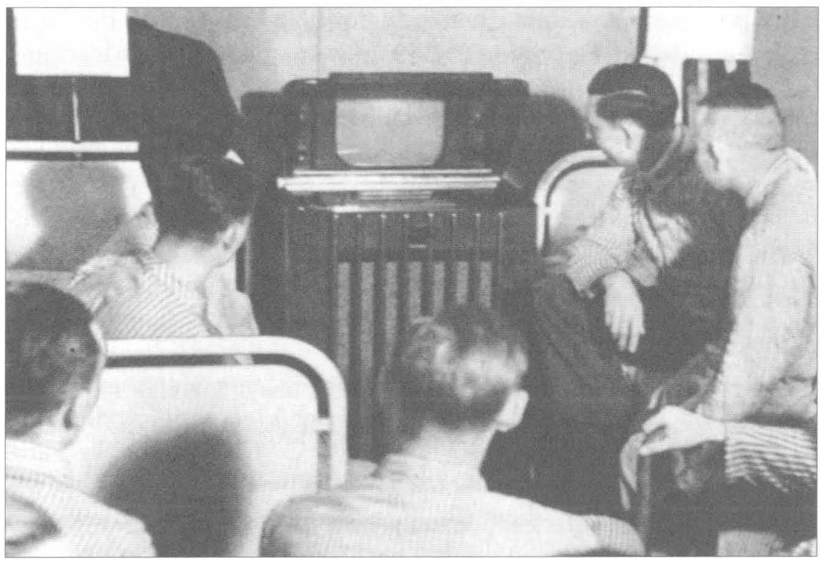
In addition, the Wehrmacht had set up television theaters with large-scale projects for the care of the wounded, which were in operation until the end of 1944.
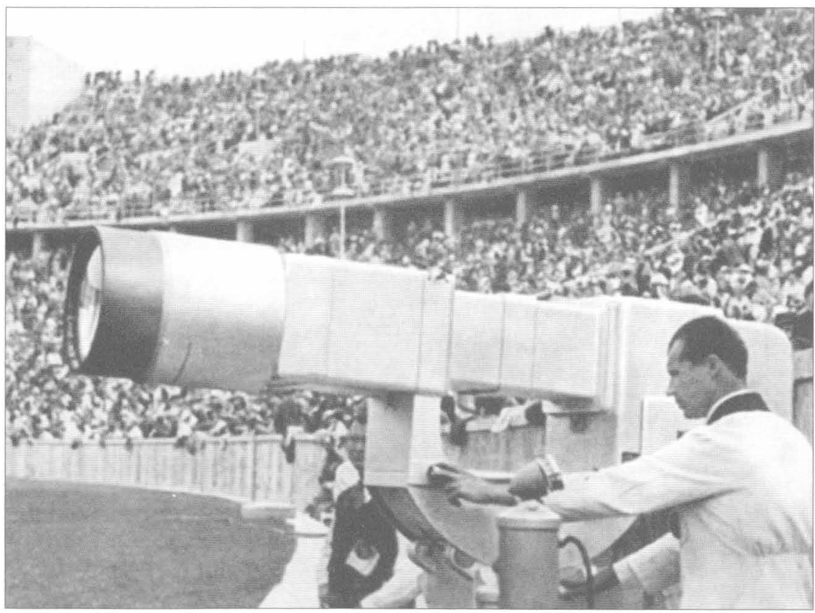
No, this is not the TV Camera, this is the ancestor of Beamer which was named Eidophor
Television had a permanent place in military hospitals.
From: Heiko
Zeutschner, The Brown Screen:
Television in National
Socialism, Rotbuch, Hamburg 1995.
Color-TV Made In Germany
From the late 1940s onward, experimental broadcasts using various color television methods were aired in the USA, but none of the methods, such as the one with rotating color filters for the three primary colors, gained the approval of the experts. Besides numerous technical problems, the main challenge was transmitting color television broadcasts in a way that was also compatible with black and white televisions. In 1953, a major breakthrough in color television technology suddenly occurred when the USA introduced the NTSC standard. Here, too, captured German technology played a leading role. This was due to the fact that during a review of patent documents taken from Germany after 1945, the patent of Werner Flechsig was discovered.
The German physicist Werner Flechsig had been building image pickup tubes for the German Television Corporation (Fernseh-AG) since 1936 and, in 1938, invented the shadow mask tube, the basic principle of today's picture tubes for color television receivers. In a modified form, the shadow mask tube remains a component of every television or monitor with a picture tube to this day. With the help of the stolen German patent, Norton Goldsmith, Vice President of RCA Cooperation, then developed the world's first color picture tube. As early as March 1954, RCA launched the CT100, the first mass-produced color television. It had 36 tubes, a 115-inch picture tube, and cost $1,000, which, adjusted for today's purchasing power, is equivalent to a price of around $12,000.
Miniature television cameras with transmitter
One of the greatest scientific achievements in the field of electronics during the Second World War was the development of the miniature Tonne Series Television Cameras.
Provided the camera was correctly adjusted, the bombardier only needed to guide the rockets to the received images using electrical impulses in order to hit his target. After excellent results were achieved in the laboratory, the project was handed over to the relevant research institution for testing in 1942 and was ready for deployment in 1944. The standard system was the so-called "Tonne 2" version, which had almost the same resolution as today's SVHS system.
It was already twice as large as the long-established VHS video system. The entire system weighed 50 kg and could be reduced to 2.5 kg by 1944/45 with the “Tonne 4a”. Here, the camera was already integrated into the warhead.
These few examples of the development and discoveries by
German Engineers and Scientist is just the tip of the Iceberg of
Ten To 100 Years Ahead
These few examples of German inventions and developments represent only the tip of the iceberg of German engineering during the Nazi regime. Considering the incredibly difficult conditions under the constant threat of Allied terror bombing, the shortage of essential raw materials, and the drain of young talent due to wartime demands, one can only look back on these achievements with astonishment. All this is particularly remarkable given that American "experts" estimated German science to be ten to one hundred years ahead of its American counterpart.
German companies in foreign hands
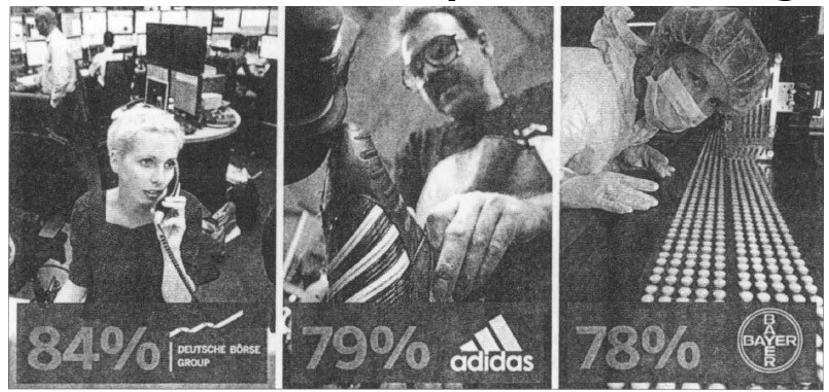
From Handelsblatt, December 17, 2007. With their very high export quota, German corporations are particularly attractive to foreign investors. For the first time, the 30 largest German companies belong to foreign investors.